
120+ từ vựng Tiếng Anh chuyên ngành báo chí và ứng dụng trong IELTS Speaking
Đối với người học và người đang làm trong lĩnh vực báo chí, việc nắm rõ các từ tiếng Anh chuyên ngành sẽ giúp họ có thể tự tin khi trao đổi công việc bằng tiếng Anh và nắm bắt thông tin nhanh chóng hơn. Hãy cùng “bắt nhịp” với 120+ từ vựng tiếng Anh chuyên ngành báo chí được tổng hợp và cập nhật mới nhất! Bộ từ vựng này sẽ là chìa khóa vàng giúp bạn nâng tầm vốn từ vựng tiếng Anh về lĩnh vực truyền thông đầy tiềm năng.
Từ vựng Tiếng Anh chuyên ngành báo chí
Từ vựng Tiếng Anh về các loại báo/tạp chí
Nếu không tìm hiểu quá sâu về báo, tạp chí thì chúng ta chỉ có thể biết các từ vựng cơ bản như journalism, news… Vì vậy, chúng tôi sẽ đưa ra ra cho bạn những từ vựng Tiếng Anh chuyên ngành báo chí giúp bạn hiểu được báo chí tiếng anh là gì, bài báo tiếng anh là gì,tờ báo tiếng anh là gì, tạp chí tiếng anh là gì…
Từ vựngPhiên âmNghĩaCâu ví dụNewspaper/ˈnjuːzˌpeɪpər/Tờ báoI read the newspaper every morning to stay up-to-date on current events.
(Tôi đọc báo mỗi sáng để cập nhật tin tức thời sự.)
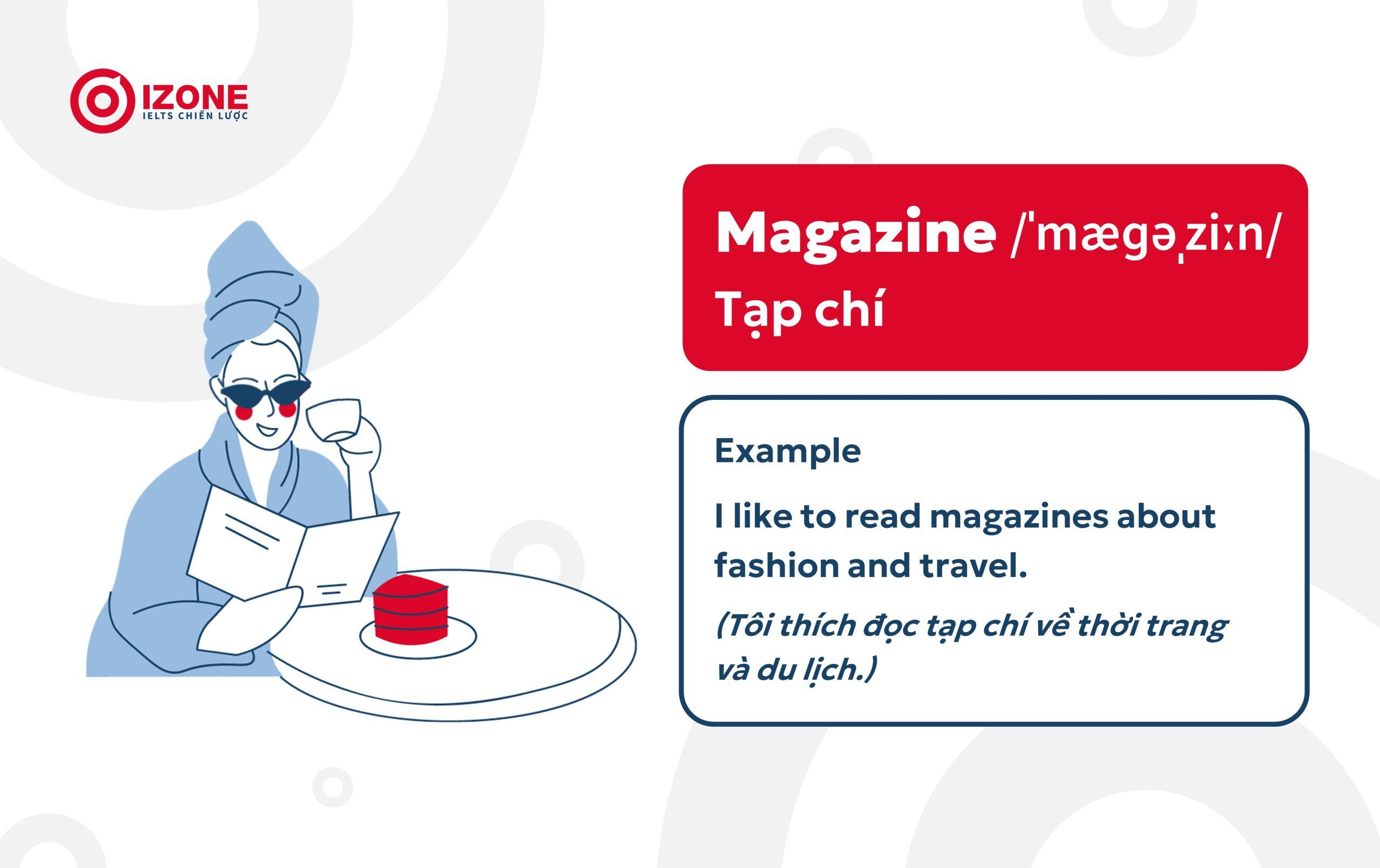
Magazine/ˈmæɡəˌziːn/Tạp chíI like to read magazines about fashion and travel.
(Tôi thích đọc tạp chí về thời trang và du lịch.)
Online news/ˌɑːnˈlaɪn ˈnjuːz/Tin tức trực tuyếnI prefer online news because it’s more up-to-date than traditional news sources.
(Tôi thích tin tức trực tuyến hơn vì nó cập nhật hơn các nguồn tin truyền thống.)
General interest newspaper/ˌdʒɛnərəl ˈɪntrɪst ˈnjuːzˌpeɪpər/Báo tổng hợpThe New York Times is a general interest newspaper that covers a wide range of topics.
(The New York Times là một tờ báo tổng hợp đưa tin về nhiều chủ đề khác nhau.)
Target audience newspaper/ˈtɑːɡɪt ˈɑːdiəns ˈnjuːzˌpeɪpər/Báo dành cho đối tượng mục tiêu cụ thểThe newspaper’s target audience is interested in fashion and lifestyle.
(Đối tượng mục tiêu của báo quan tâm đến thời trang và lối sống.)
Trade publication/ˈtreɪd ˌpʌblɪˈkeɪʃən/Tạp chí chuyên ngànhThe Journal of the American Medical Association is a trade publication for doctors.
(The Journal of the American Medical Association là một tạp chí chuyên ngành dành cho các bác sĩ.)
Local newspaper/ˈloʊkəl ˈnjuːzˌpeɪpər/Báo địa phươngThe local newspaper covers news and events in my community.
(Tờ báo địa phương đưa tin về các sự kiện và tin tức trong cộng đồng của tôi.)
National newspaper/ˈnæʃənəl ˈnjuːzˌpeɪpər/Báo quốc giaThe Washington Post is a national newspaper that is read by people all over the United States.
(The Washington Post là một tờ báo quốc gia được đọc bởi mọi người trên khắp Hoa Kỳ.)
International newspaper/ˌɪntərˈnæʃənəl ˈnjuːzˌpeɪpər/Báo quốc tếThe New York Times is an international newspaper that is read by people all over the world.
(The New York Times là một tờ báo quốc tế được đọc bởi mọi người trên khắp thế giới.)
Tabloid/ˈtæblɔɪd/Báo lá cảiThe latest tabloid headlines are all about the celebrity couple’s divorce.
(Những tiêu đề mới nhất trên các báo lá cải đều là về vụ ly hôn của cặp vợ chồng nổi tiếng.)
Broadsheet/ˈbroʊdˌʃiːt/Báo khổ lớnBroadsheets are typically more serious and in-depth than tabloids.
(Báo khổ lớn thường nghiêm túc và chuyên sâu hơn báo lá cải.)
Yellow journalism/ˈjɛloʊ ˈdʒɜːnəˌlɪzəm/Báo chí lá cảiYellow journalism uses sensational headlines and biased reporting to attract readers.
(Báo chí lá cải sử dụng tiêu đề giật gân và đưa tin thiên vị để thu hút người đọc.)
Underground press/ˌʌndərˈɡraʊnd ˈprɛs/Báo chí ngầmUnderground press was often used to express political views that were not allowed by the mainstream media.
(Báo chí ngầm thường được sử dụng để bày tỏ quan điểm chính trị không được phép bởi truyền thông chính thống.)
Newsletter/ˈnjuːzˌletər//Bản tinI subscribe to a few newsletters that keep me informed about industry news.
(Tôi đăng ký một vài bản tin để cập nhật tin tức ngành.)
Online publication//ˌɒnlaɪn pəblɪˈkeɪʃən/Ấn phẩm trực tuyếnMany newspapers and magazines now have online publications in addition to their print editions.
(Nhiều báo và tạp chí hiện có ấn phẩm trực tuyến ngoài phiên bản in.)
Literary magazine/ˈlɪtərəri ˈmæɡəziːn/Tạp chí văn họcThe literary magazine publishes short stories, poems, and essays.
(Tạp chí văn học xuất bản truyện ngắn, thơ và tiểu luận.)
Scholarly journal/ˈskɑːləri ˈdʒɜːnəl/Tạp chí khoa họcScholarly journals are where scientific researchers publish the results of their research.
(Tạp chí khoa học là nơi các nhà nghiên cứu khoa học công bố kết quả nghiên cứu của họ.)
Scoop/skuːp/Tin độc quyềnThe reporter got a scoop on the latest celebrity scandal.
(Phóng viên đã có được tin độc quyền về vụ bê bối mới nhất của người nổi tiếng.)
Fashion magazine/ˈfæʃən ˈmæɡəziːn/Tạp chí thời trangThe fashion magazine features the latest trends in clothing, accessories, and beauty.
(Tạp chí thời trang giới thiệu những xu hướng mới nhất về trang phục, phụ kiện và làm đẹp.)
Sports magazine/spoːrts ˈmæɡəziːn/Tạp chí thể thaoThe sports magazine covers a wide range of sports, from professional leagues to college athletics.
(Tạp chí thể thao bao gồm nhiều môn thể thao, từ các giải đấu chuyên nghiệp đến thể thao đại học.)
Children’s magazine/ˈtʃɪldrənz ˈmæɡəziːn/Tạp chí dành cho trẻ emChildren’s magazines are filled with stories, games, and activities for kids.
(Tạp chí dành cho trẻ em chứa đầy những câu chuyện, trò chơi và hoạt động dành cho trẻ em.)
Teen magazine/tiːn ˈmæɡəziːn/Tạp chí cho thanh thiếu niênTeen magazines focus on topics that are relevant to teenagers, such as music, fashion, and relationships.
(Tạp chí dành cho thanh thiếu niên tập trung vào các chủ đề liên quan đến thanh thiếu niên, chẳng hạn như âm nhạc, thời trang và các mối quan hệ.)
Comedy magazine/ˈkɑːmədi ˈmæɡəziːn/Tạp chí hài hướcComedy magazines publish jokes, cartoons, and other humorous content.
(Tạp chí hài hước xuất bản truyện tranh, phim hoạt hình và các nội dung hài hước khác.)
Satire magazine/ˈsætaɪər ˈmæɡəziːn/Tạp chí châm biếmSatire magazines use humor to criticize current events or social issues.
(Tạp chí châm biếm sử dụng sự hài hước để châm biếm các sự kiện thời sự hoặc các vấn đề xã hội.)
Business magazine/ˈbɪznəs ˈmæɡəziːn/Tạp chí kinh doanhBusiness magazines report on news and trends in the world of business.
(Tạp chí kinh doanh đưa tin về các tin tức và xu hướng trong thế giới kinh doanh.)
Technology magazine/ˈteknɑːlədʒi ˈmæɡəziːn/Tạp chí công nghệTechnology magazines cover new gadgets, software, and other tech-related topics.
(Tạp chí công nghệ giới thiệu các tiện ích mới, phần mềm và các chủ đề liên quan đến công nghệ khác.)
Travel magazine/ˈtrævl ˈmæɡəziːn/Tạp chí du lịchTravel magazines provide information about destinations, attractions, and travel tips.
(Tạp chí du lịch cung cấp thông tin về địa điểm, điểm tham quan và mẹo du lịch.)
Home and garden magazine/hoʊm ænd ˈɡɑːrdn ˈmæɡəziːn/Tạp chí nhà cửa và vườnHome and garden magazines offer ideas for decorating, remodeling, and landscaping.
(Tạp chí nhà cửa và vườn cung cấp ý tưởng trang trí, cải tạo và thiết kế cảnh quan.)
Food and cooking magazine/fuːd ænd ˈkʊkɪŋ ˈmæɡəziːn/Tạp chí ẩm thực và nấu ănFood and cooking magazines feature recipes, restaurant reviews, and culinary tips.
(Tạp chí ẩm thực và nấu ăn giới thiệu công thức nấu ăn, đánh giá nhà hàng và mẹo nấu ăn.)
Health and fitness magazine/helθ ænd ˈfɪtnəs ˈmæɡəziːn/Tạp chí sức khỏe và thể dụcHealth and fitness magazines provide information on nutrition, exercise, and overall well-being.
(Tạp chí sức khỏe và thể dục cung cấp thông tin về dinh dưỡng, tập thể dục và sức khỏe tổng thể.)
Lifestyle magazine/ˈlaɪfstaɪl ˈmæɡəziːn/Tạp chí lối sốngLifestyle magazines cover a variety of topics related to personal interests, such as fashion, food, travel, and home décor.
(Tạp chí lối sống bao gồm nhiều chủ đề liên quan đến sở thích cá nhân, chẳng hạn như thời trang, ẩm thực, du lịch và trang trí nhà cửa.)
Từ vựng Tiếng Anh về người làm trong ngành báo chí
Ở phần này, IZONE cung cấp cho bạn những từ vựng Tiếng Anh chuyên ngành báo chí về tên gọi nghề nghiệp của từng vị trí trong ngành báo chí, giúp bạn hiểu được phóng viên tiếng anh là gì, nhà báo tiếng anh là gì…
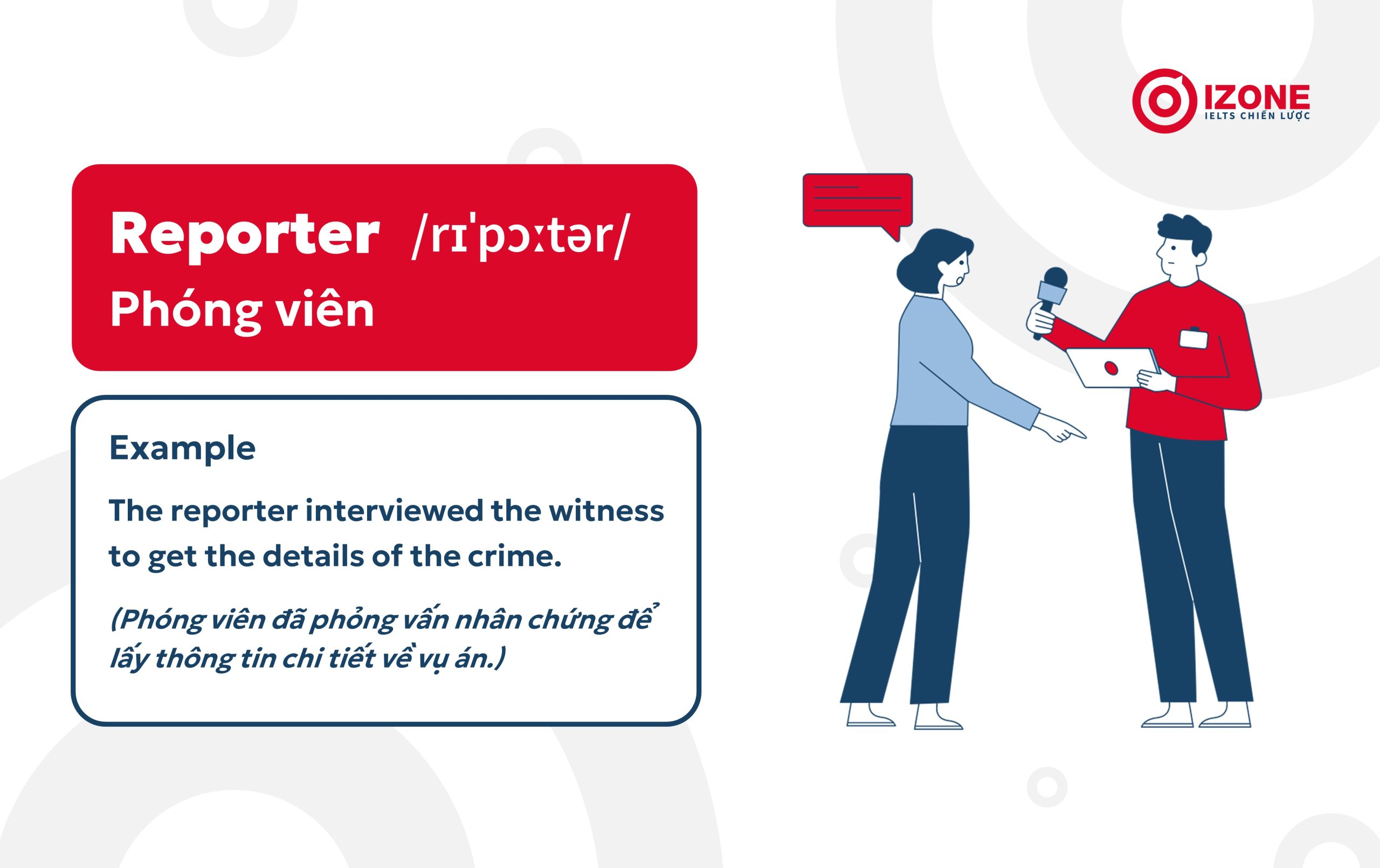
Từ vựngPhiên âmNghĩaVí dụReporter/rɪˈpɔːtər/Phóng viênThe reporter interviewed the witness to get the details of the crime.
(Phóng viên đã phỏng vấn nhân chứng để lấy thông tin chi tiết về vụ án.)
Editor/ˈedɪtər/Biên tập viênThe editor of the newspaper made some important changes to the article.
(Biên tập viên của tờ báo đã thực hiện một số thay đổi quan trọng đối với bài báo.)
Photojournalist/ˌfoʊtoʊˈdʒɜːnəlɪst/Phóng viên ảnhThe photojournalist captured the moment the runner won the race.
(Phóng viên ảnh đã ghi lại khoảnh khắc người chạy về đích đầu tiên.)
Videographer/ˌvɪdiˈɑːgrəfər/Quay phimThe videographer filmed the protest from start to finish.
(Quay phim đã quay phim cuộc biểu tình từ đầu đến cuối.)
Columnist/ˈkɑːləmnɪst/Nhà bình luậnThe columnist writes about a wide range of topics, including politics, sports, and culture.
(Nhà bình luận viết về nhiều chủ đề khác nhau, bao gồm chính trị, thể thao và văn hóa.)
Blogger/ˈblɑːgər/BloggerThe blogger writes about her travels and experiences.
(Blogger viết về những chuyến đi và trải nghiệm của mình.)
Freelancer/ˈfriːˌlænsər/Người làm việc tự doThe freelancer works for a variety of clients.
(Người làm việc tự do làm việc cho nhiều khách hàng khác nhau.)
Correspondent/kəˈrɛspəndənt/Phóng viên thường trúThe correspondent reports on events from the war zone.
(Phóng viên thường trú đưa tin về các sự kiện từ khu vực chiến tranh.)
Producer/prəˈdjuːsər/Nhà sản xuấtThe producer is responsible for the content and quality of the news program.
(Nhà sản xuất chịu trách nhiệm về nội dung và chất lượng của chương trình tin tức.)
Anchor/ˈæŋkər/Người dẫn chương trìnhThe anchor delivers the news to the viewers.
(Người dẫn chương trình truyền tải tin tức đến người xem.)
Editor-in-chief/ˈedɪtər ɪn ˈtʃiːf/Tổng biên tậpThe editor-in-chief is responsible for the overall content and direction of the newspaper.
(Tổng biên tập chịu trách nhiệm về nội dung và định hướng chung của tờ báo.)
Managing editor/ˈmænɪdʒɪŋ ˈedɪtər/Quản lý biên tập viênThe managing editor is responsible for the day-to-day operations of the newsroom.
(Quản lý biên tập viên chịu trách nhiệm cho các hoạt động hàng ngày của phòng tin tức.)
Journalist/ˈdʒɜːnəlɪst/Nhà báoShe is a well-known journalist who has written for many different publications.
(Cô ấy là một nhà báo nổi tiếng đã viết cho nhiều ấn phẩm khác nhau.)
Photographer/ˈfətəɡræfər/Phóng viên ảnhThe photographer captured the dramatic moment of the rescue.
(Phóng viên ảnh đã ghi lại khoảnh khắc ấn tượng của công cuộc giải cứu.)
Proofreader/ˈpruːfriːdər/Biên tập viên bản inThe proofreader carefully checked the page proofs for errors.
(Biên tập viên bản in cẩn thận kiểm tra bản in trang để tìm lỗi.)
Fact-checker/ˈfæktˌtʃɛkər/Người kiểm tra thông tinThe fact-checker verified the accuracy of the information in the article.
(Người kiểm tra thông tin đã xác minh độ chính xác của thông tin trong bài báo.)
Investigative journalist/ɪnˈvɛstɪɡeɪtɪv ˈdʒɜːnəlist/Nhà báo điều traThe investigative journalist uncovered a corruption scandal involving government officials.
(Nhà báo điều tra đã vạch trần một vụ bê bối tham nhũng liên quan đến các quan chức chính phủ.)
Social media manager/ˈsoʊʃl miːdiə ˈmænɪdʒər/Quản lý mạng xã hộiThe social media manager promoted the company’s products and services on social media.
(Quản lý mạng xã hội đã quảng bá sản phẩm và dịch vụ của công ty trên mạng xã hội.)
Public relations specialist/ˈpʌblɪk rɪˈleɪʃənz speʃəlist/Chuyên gia quan hệ công chúngThe public relations specialist wrote press releases and managed media relations.
(Chuyên gia quan hệ công chúng đã viết thông cáo báo chí và quản lý mối quan hệ với truyền thông.)
Từ vựng Tiếng Anh về tòa soạn
Một số từ vựng Tiếng Anh chuyên ngành báo chí về các bộ phận vị trí phổ biến trong tòa soạn và thường được dùng tới mà bạn cần biết, giúp bạn mở rộng thêm vốn từ vựng tiếng anh của mình.
Từ vựngPhiên âmNghĩaVí dụNewspaper office/ˈnuːzˌpeɪpər ˈɒfɪs/Tòa soạn báoI work at a newspaper office in Hanoi.
(Tôi làm việc tại một tòa soạn báo ở Hà Nội.)
Newsroom/ˈnjuːzˌrum/Phòng tinThe newsroom was buzzing with activity as the deadline approached.
(Phòng tin náo nhiệt khi thời hạn nộp bài cận kề.)
Editorial/ˌɛdəˈtɔːriəl/Bài xã luậnThe editorial called for the government to take action on climate change.
(Bài xã luận kêu gọi chính phủ hành động về biến đổi khí hậu.)
Editorial board/ˌɛdəˈtɔːriəl bɔːd/Ban biên tậpThe editorial board is responsible for the overall quality of the newspaper.
(Ban biên tập chịu trách nhiệm về chất lượng chung của tờ báo.)
Press/pres/Báo chíThe press played a vital role in exposing the corruption.
(Báo chí đóng vai trò quan trọng trong việc vạch trần tham nhũng.)
Media/ˈmiːdiə/Truyền thôngThe media plays a powerful role in shaping public opinion.
(Truyền thông đóng vai trò quan trọng trong việc định hình dư luận.)
News editor/njuːz ˈedɪtər/Biên tập viên tin tứcThe news editor assigns stories to reporters and edits their work.
(Biên tập viên tin tức phân công phóng viên viết bài và biên tập bài viết của họ.)
Feature editor/ˈfiːtʃər ˈedɪtər/Biên tập viên bài viếtThe feature editor is responsible for longer, more in-depth stories.
(Biên tập viên bài viết chịu trách nhiệm cho những câu chuyện dài và chuyên sâu hơn.)
Sub-editor/ˈsʌb ˈedɪtər/Thư ký tòa soạnThe sub-editor checks the grammar and spelling of the articles.
(Thư ký tòa soạn kiểm tra ngữ pháp và chính tả của các bài báo.)
Photographer/ˈfəʊtəɡræfər/Thợ ảnhThe photographer took pictures of the scene of the accident.
(Thợ ảnh đã chụp ảnh hiện trường vụ tai nạn.)
Deadline/ˈdedlaɪn/Hạn chótThe reporters were working hard to meet the deadline.
(Các phóng viên đang làm việc chăm chỉ để đáp ứng hạn chót.)
Censorship/ˈsɛnʃəpʃɪp/Kiểm duyệtThe censorship of the book was due to its political content.
(Việc kiểm duyệt cuốn sách này là do nội dung chính trị của nó.)
Freedom of the press/ˈfriːdəm əv ðə pres/Tự do báo chíFreedom of the press allows journalists to report the news without fear of government censorship or reprisal.
(Tự do báo chí cho phép các nhà báo đưa tin mà không sợ bị chính phủ kiểm duyệt hay trừng phạt.)
Từ vựng Tiếng Anh về các phần của tờ báo
Nếu bạn đã biết tờ báo là newspaper, thì trong tờ báo có nhiều phần thông tin khác nhau. Dưới đây, IZONE cung cấp cho bạn bộ từ vựng Tiếng Anh chuyên ngành báo chí về những mục tin trong tờ báo.
Từ vựngPhiên âmNghĩaVí dụFront page/ˈfrʌnt ˈpeɪdʒ/Trang đầu tiên của tờ báoHeadline/ˈhɛdlaɪn/Tiêu đềLead story/liːd ˈstoːri/Tin tức chínhByline/ˈbaɪlaɪn/Tên của tác giả bài báoDateline/ˈdeɪtlaɪn/Ngày thángPhoto caption/ˈfoʊtoʊ ˈkæpʃən/Giải thích ngắn gọn về một bức ảnhJump line/dʒʌmp ˈlaɪn/Ký hiệu chuyển trangNews section/njuːz ˈsekʃən/Phần tin tứcHard news/hɑːd njuːz/Tin tức nóng hổiSoft news/sɒft njuːz/Phần tin tức giải tríNational news/ˈnæʃənəl njuːz/Tin tức về các sự kiện xảy ra trong một quốc gia cụ thểLocal news/ˈloʊkəl njuːz/Tin tức về các sự kiện xảy ra trong một cộng đồng địa phươngBusiness news/ˈbɪznəs njuːz/Tin tức về các hoạt động kinh doanh và tài chínhSports news/spɔːrts njuːz/Tin tức về các sự kiện thể thaoAdvertisement/ˌæd.vərˈtaɪz.mənt/Quảng cáoCác động từ tiếng anh thường dùng trong báo chí
Một số động từ Tiếng Anh chuyên ngành báo chí thường được sử dụng trong chủ đề báo chí có tính ứng dụng cao trong việc học tiếng anh mà bạn cần biết
Từ vựngPhát âm NghĩaVí dụResearch/rɪˈsɜːtʃ/Nghiên cứu, tìm kiếm thông tinThe journalist researched the topic for several weeks before writing the article.
(Nhà báo đã nghiên cứu chủ đề trong vài tuần trước khi viết bài báo.)
Investigate/ɪnˈvɛstɪɡeɪt/Điều tra, khảo sátReporters investigated the corruption allegations against the politician.
(Các phóng viên đã điều tra cáo buộc tham nhũng chống lại chính trị gia.)
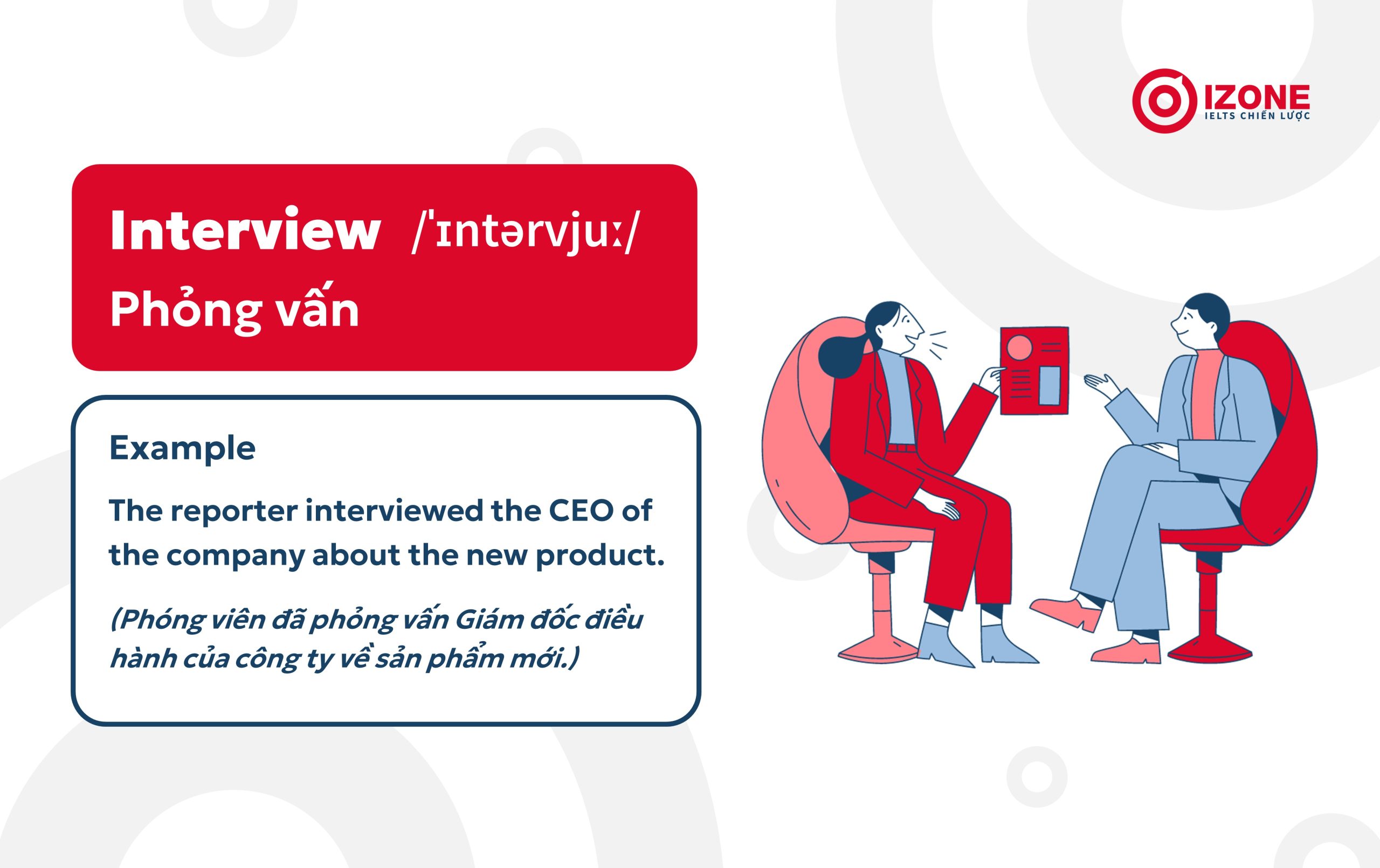
Interview/ˈɪntərvjuː/Phỏng vấnThe reporter interviewed the CEO of the company about the new product.
(Phóng viên đã phỏng vấn Giám đốc điều hành của công ty về sản phẩm mới.)
Gather/ˈɡæðər/Thu thập, gom gópThe volunteers gathered donations for the victims of the flood.
(Các tình nguyện viên đã gom góp để quyên góp cho các nạn nhân lũ lụt.)
Observe/əbˈzɜːrv/Quan sátThe reporter observed the crime scene carefully, taking notes and photographing any evidence.
(Phóng viên quan sát hiện trường vụ án một cách cẩn thận, ghi chép và chụp ảnh bất kỳ bằng chứng nào.)
Analyze/əˈnəlaɪz/Phân tíchThe analyst analyzed the data to identify trends.
(Nhà phân tích đã phân tích dữ liệu để xác định xu hướng.)
Verify/ˈvɛrɪfaɪ/Xác minhThe doctor verified the patient’s identity before proceeding with the surgery.
(Bác sĩ đã xác minh danh tính bệnh nhân trước khi tiến hành phẫu thuật.)
Confirm/kənˈfɜːrm/Xác nhậnThe company has confirmed the date of the launch event.
(Công ty đã xác nhận ngày tổ chức sự kiện ra mắt.)
Validate/ˈvælɪdeɪt/Xác thựcThe study was validated by a group of independent researchers.
(Nghiên cứu đã được xác thực bởi một nhóm các nhà nghiên cứu độc lập.)
Write/raɪt/ViếtThe editor writes catchy headlines to attract readers.
(Biên tập viên viết những tiêu đề hấp dẫn để thu hút người đọc.)
Edit/ˈedɪt/Biên tập, chỉnh sửaThe editor edited the manuscript to improve the clarity and flow of the writing.
(Biên tập viên đã chỉnh sửa bản thảo để cải thiện độ rõ ràng và mạch lạc của bài viết.)
Proofread/ˈpruːfriːd/Đọc bản in, kiểm tra lỗiThe editor carefully proofread the page
(Biên tập viên bản in cẩn thận kiểm tra bản in .)
Rewrite/ˈriːraɪt/Viết lạiThe author rewrote the chapter to make it more engaging for readers.
(Tác giả đã viết lại chương để thu hút người đọc hơn.)
Summarize/ˈsʌməraɪz/Tóm tắtCan you summarize the main points of the article for me?
(Bạn có thể tóm tắt những điểm chính của bài báo cho tôi không?)
Paraphrase/ˌpærəˈfreɪz/Diễn đạt lạiThe translator paraphrased the original text to make it easier for the target audience to understand.
(Người dịch đã diễn đạt lại văn bản gốc để người đọc mục tiêu dễ hiểu hơn.)
Quote/kwəʊt/Trích dẫnThe speaker quoted a famous poem in his speech.
(Diễn giả đã trích dẫn một bài thơ nổi tiếng trong bài phát biểu của mình.)
Cite/saɪt/Ghi chú nguồnThe researcher cited her sources in the bibliography.
(Nhà nghiên cứu đã ghi chú nguồn của mình trong thư mục tài liệu tham khảo.)
Format/ˈfɔːrmæt/Định dạngThe document was formatted according to the company’s guidelines.
(Tài liệu được định dạng theo hướng dẫn của công ty.)
Publish/ˈpʌblɪʃ/Xuất bảnThe journalist published her findings in a scientific journal.
(Nhà báo xuất bản phát hiện của mình trên một tạp chí khoa học.)
Educate/ˈedjəkeɪt/Giáo dụcThe teacher educated the students about the importance of environmental protection.
(Giáo viên đã giáo dục học sinh về tầm quan trọng của bảo vệ môi trường.)
Entertain/ɪnˈtɜːteɪn/Giải tríThe TV show entertains viewers with funny skits and musical performances.
(Chương trình truyền hình giải trí cho khán giả bằng những tiểu phẩm hài hước và màn trình diễn âm nhạc.)
Break/breɪk/Bẻ gãy, phá vỡ (tin tức)The journalist broke the story about the corruption scandal.
(Nhà báo đã phá vỡ câu chuyện về vụ bê bối tham nhũng.)
Cover/ˈkʌvər/Bao gồm, đưa tinThe magazine covers fashion, beauty, and lifestyle.
(Tạp chí này đưa tin về thời trang, làm đẹp và lối sống.)
Expose/ɪkˈspoʊz/Phơi bàyThe journalist exposed the unethical practices of the company.
(Nhà báo đã phơi bày những hành vi phi đạo đức của công ty.)
Reveal/rɪˈviːl/Tiết lộThe whistleblower revealed the truth about the company’s operations.
(Người tố giác đã tiết lộ sự thật về hoạt động của công ty.)
Sensationalize/ˌsɛnʃəneɪˈlaɪz/Giật gânThe tabloid sensationalized the story to sell more copies.
(Báo lá cải đã giật gân câu chuyện để bán được nhiều bản hơn.)
Spin/spɪn/Bẻ cong sự thậtThe tabloid was accused of putting a spin on the facts to sell more copies.
(Tờ báo lá cải bị buộc tội bẻ cong sự thật để bán được nhiều bản hơn.)
Từ vựng về các kỹ năng cần thiết trong ngành báo chí
Trong ngành báo chí cần có một số kỹ năng cần thiết nhất định mà bạn cần tìm hiểu trong từ vựng Tiếng Anh chuyên ngành báo chí. Dưới đây chúng tôi đã cung cấp cho bạn một số kỹ năng phổ biến thường gặp.
Từ vựngPhiên âmNghĩaVí dụResearch skills/ˈriːsɜːtʃ skɪlz/Kỹ năng nghiên cứuThe journalist used her research skills to uncover the truth about the scandal.
(Nhà báo đã sử dụng kỹ năng nghiên cứu của mình để phanh phui sự thật về vụ bê bối.)
Gathering information/ˈɡæðərɪŋ ɪnˈfɔːmeɪʃən/Thu thập thông tinThe reporter gathered information from multiple sources for his story.
(Phóng viên đã thu thập thông tin từ nhiều nguồn cho bài báo của mình.)
Evaluating information/ɪˌvæljʊˈeɪtɪŋ ɪnˈfɔːmeɪʃən/Đánh giá thông tinIt is important for journalists to evaluate information carefully before publishing it.
(Điều quan trọng là các nhà báo phải đánh giá thông tin cẩn thận trước khi xuất bản.)
Organizing information/ɔːrɡəˈnaɪzɪŋ ɪnˈfɔːmeɪʃən/Sắp xếp thông tinThe editor helped the writer organize information for the article.
(Biên tập viên đã giúp người viết sắp xếp thông tin cho bài báo.)
Fact-checking skills/ˈfæktˌtʃekɪŋ skɪlz/Kỹ năng kiểm tra thông tinThe fact-checker verified the information in the article before it was published.
(Người kiểm tra thông tin đã xác minh thông tin trong bài báo trước khi được xuất bản.)
Verifying sources/ˈvɛrɪfaɪɪŋ ˈsɔːrsəz/Xác minh nguồn tinIt is crucial for journalists to verify sources to ensure the accuracy of their reporting.
(Điều quan trọng là các nhà báo phải xác minh nguồn tin để đảm bảo độ chính xác của việc đưa tin.)
Cross-referencing information/ˈkrɒsˌrefərənsɪŋ ɪnˈfɔːmeɪʃən/So sánh chéo thông tinThe journalist cross-referenced information from different sources to get a complete picture of the story.
(Nhà báo đã so sánh chéo thông tin từ các nguồn khác nhau để có được bức tranh toàn cảnh về câu chuyện.)
Identifying bias/aɪˈdentɪfaɪɪŋ ˈbaɪəs/Nhận diện sự thiên vịIt is important for journalists to be aware of and identify bias in their reporting.
(Điều quan trọng là các nhà báo phải nhận thức và nhận diện sự thiên vị trong việc đưa tin của họ.)
Writing skills/ˈraɪtɪŋ skɪlz/Kỹ năng viếtThe journalist’s writing skills were evident in her clear and concise prose.
(Kỹ năng viết của nhà báo thể hiện rõ ràng qua văn phong rõ ràng và súc tích của cô ấy.)
Clear and concise writing/klɪər ænd kənˈsaɪs raɪtɪŋ/Viết rõ ràng, súc tíchThe writer’s clear and concise writing made the complex topic easy to understand.
(Cách viết rõ ràng và súc tích của người viết khiến chủ đề phức tạp trở nên dễ hiểu.)
Engaging and informative writing/ɪnˈɡeɪdʒɪŋ ænd ɪnˈfɔːmətɪv raɪtɪŋ/Viết hấp dẫn và cung cấp thông tinThe journalist’s engaging and informative writing kept the reader hooked from start to finish.
(Cách viết hấp dẫn và cung cấp thông tin của nhà báo khiến người đọc bị cuốn hút từ đầu đến cuối.)
Structured and organized writing/ˈstrʌktʃərd ænd ɔːrɡəˈnaɪzd raɪtɪŋ/Viết có cấu trúc và tổ chứcThe article was well-written with a structured and organized format.
(Bài báo được viết tốt với cấu trúc và tổ chức rõ ràng.)
Editing skills/ˈedɪtɪŋ skɪlz/Kỹ năng biên tậpThe editor’s editing skills helped to improve
(Kỹ năng chỉnh sửa của biên tập viên đã giúp cải thiện.)
Xem thêm: Tổng hợp 60+ tục ngữ tiếng Anh thông dụng trong cuộc sống (izone.edu.vn)
Một số Collocations và Idioms liên quan đến chủ đề báo chí
Dưới đây là một số collocations liên quan đến ngành báo chí mà bạn cần biết. Chúng tôi đưa ra những cụm từ thường gặp nhất trong từ vựng về Tiếng Anh chuyên ngành báo chí giúp bạn dễ dàng sử dụng như thông cáo báo chí tiếng anh là gì, trình bày báo cáo tiếng anh là gì…
CollocationsNghĩaVí dụDo research onNghiên cứu vềThe journalist needs to do research on the latest environmental policies before writing the article.
(Nhà báo cần nghiên cứu về các chính sách môi trường mới nhất trước khi viết bài báo.)
Gather information fromThu thập thông tin từReporters often gather information from various sources to ensure the accuracy of their stories.
(Các phóng viên thường thu thập thông tin từ nhiều nguồn khác nhau để đảm bảo tính chính xác của câu chuyện.)
Interview sourcesPhỏng vấn nguồn tinShe had to interview sources close to the incident to get a comprehensive view of what happened.
(Cô ấy phải phỏng vấn nguồn tin gần gũi với sự việc để có cái nhìn toàn diện về những gì đã xảy ra.)
Write an article aboutViết bài báo vềHe plans to write an article about the impact of social media on teenagers.
(Anh ấy dự định viết bài báo về ảnh hưởng của mạng xã hội đối với thanh thiếu niên.)
File a storyGửi bài báoAfter covering the event, the reporter quickly filed a story to meet the deadline.
(Sau khi đưa tin về sự kiện, phóng viên nhanh chóng gửi bài báo để kịp thời hạn.)
Break a storyPhá tinThe news channel was the first to break a story about the political scandal.
(Kênh tin tức là kênh đầu tiên phá tin về vụ bê bối chính trị.)
Get a scoopCó tin độc quyềnThe journalist managed to get a scoop on the celebrity’s secret wedding.
(Nhà báo đã thành công trong việc có tin độc quyền về đám cưới bí mật của người nổi tiếng.)
Edit an articleBiên tập bài báoThe editor needs to edit an article to ensure it meets the publication’s standards.
(Biên tập viên cần biên tập bài báo để đảm bảo nó đáp ứng các tiêu chuẩn của ấn phẩm.)
Proofread copyĐọc bản inBefore going to print, it’s essential to proofread copy to catch any errors.
(Trước khi in, việc đọc bản in để phát hiện bất kỳ lỗi nào là rất quan trọng.)
Layout a pageTrình bày trang báoThe designer will layout a page to make it visually appealing and easy to read.
(Nhà thiết kế sẽ trình bày trang báo để làm cho nó hấp dẫn về mặt thị giác và dễ đọc.)
Publish a newspaperXuất bản báoThe team works tirelessly to publish a newspaper every morning.
(Đội ngũ làm việc không mệt mỏi để xuất bản báo mỗi buổi sáng.)
Go to pressIn ấnThe final version of the magazine will go to press tonight.
(Phiên bản cuối cùng của tạp chí sẽ in ấn tối nay.)
World newsTin tức quốc tếThe journalist specializes in world news, covering events from different countries.
(Nhà báo chuyên về tin tức quốc tế, đưa tin về các sự kiện từ các quốc gia khác nhau.)
Arts and entertainment newsTin tức nghệ thuật và giải tríThe magazine features arts and entertainment news, including movie reviews and concert schedules.
(Tạp chí có tin tức nghệ thuật và giải trí, bao gồm đánh giá phim và lịch trình các buổi hòa nhạc.)
Press releaseThông cáo báo chíThe company issued a press release to annce their new product launch.
(Công ty đã phát hành một thông cáo báo chí để thông báo về việc ra mắt sản phẩm mới của họ.)
Trong chủ đề về báo chí, những thành ngữ tiếng anh này thường xuyên được sử dụng, nó có thể giúp bạn nâng band điểm trong phần thi Speaking IELTS
The reporter spent weeks digging for dirt on the politician’s past.
(Phóng viên đã dành nhiều tuần tìm kiếm thông tin tai tiếng về quá khứ của chính trị gia.)
Get the scoopCó được tin độc quyềnShe managed to get the scoop on the company’s secret merger.
(Cô ấy đã thành công trong việc có được tin độc quyền về việc sáp nhập bí mật của công ty.)
Hit the pressXuất bản, công bố thông tinThe scandal hit the press and quickly became the talk of the town.
(Vụ bê bối xuất bản và nhanh chóng trở thành đề tài bàn tán của thành phố.)
In the limelightLà tâm điểm chú ý của truyền thôngThe actor has been in the limelight ever since his award-winning performance.
(Nam diễn viên đã trở thành tâm điểm chú ý của truyền thông kể từ khi anh ấy giành được giải thưởng.)
Jump on the bandwagonTham gia vào một xu hướng, trào lưu phổ biếnWhen the story about the missing child went viral, many news outlets jumped on the bandwagon and started reporting on it.
(Khi câu chuyện về đứa trẻ mất tích lan truyền trên mạng xã hội, nhiều hãng tin đã tham gia vào xu hướng và bắt đầu đưa tin về nó.)
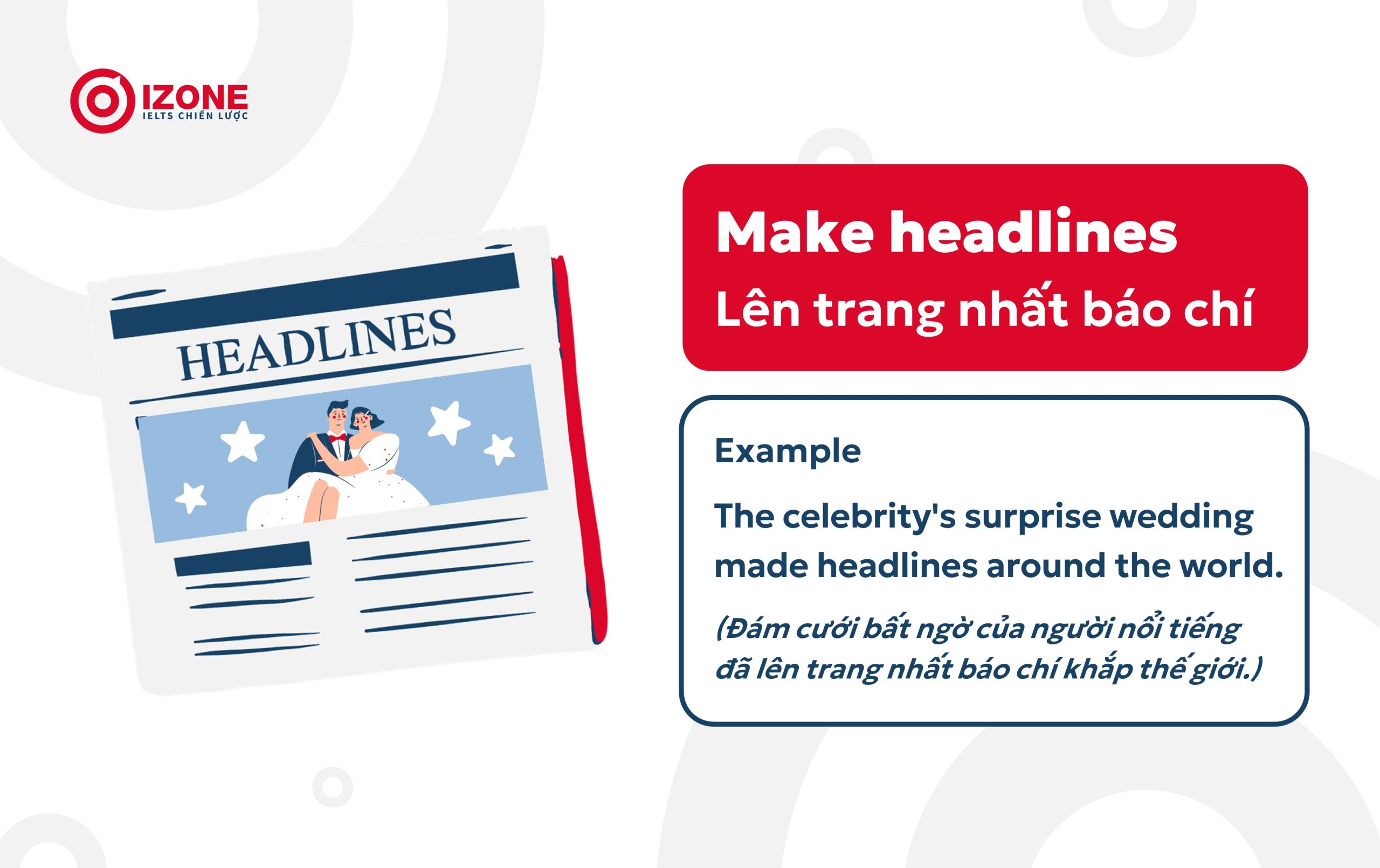
Make headlinesLên trang nhất báo chíThe celebrity’s surprise wedding made headlines around the world.
(Đám cưới bất ngờ của người nổi tiếng đã lên trang nhất báo chí khắp thế giới.)
Off the recordKhông chính thức, không được ghi nhậnThe politician shared some off the record comments with the journalist.
(Chính trị gia đã chia sẻ một số bình luận không chính thức với nhà báo.)
Paint the town redTiệc tùng, vui chơi náo nhiệtAfter the big win, the team decided to paint the town red.
(Sau chiến thắng lớn, đội quyết định tiệc tùng náo nhiệt.)
Plant a storyBơm tin, tung tin đồnThe PR team planted a story about the new product in several major newspapers.
(Đội PR đã bơm tin về sản phẩm mới trên một số tờ báo lớn.)
Read between the linesHiểu ý ẩn dụ, ý tứ sâu xaYou need to read between the lines to understand the true message of the editorial.
(Bạn cần hiểu ý ẩn dụ để hiểu được thông điệp thực sự của bài xã luận.)
Steal someone’s thunderChặn đứng, lấy đi vinh quang của ai đóShe felt her colleague stole her thunder by anncing the project first.
(Cô ấy cảm thấy đồng nghiệp đã lấy đi vinh quang của mình bằng cách công bố dự án trước.)
Take something to the pressPhát tán thông tin cho báo chíThe whistleblower decided to take the information to the press.
(Người tố giác quyết định phát tán thông tin cho báo chí.)
Tip off the pressBáo tin cho báo chíAn anonymous source tipped off the press about the corruption scandal.
(Một nguồn tin ẩn danh đã báo tin cho báo chí về vụ bê bối tham nhũng.)
Twist the storyBẻ cong sự thậtThe tabloid twisted the story to make it more sensational.
(Tờ báo lá cải đã bẻ cong sự thật để làm cho câu chuyện thêm phần giật gân.)
Một số câu hỏi IELTS Speaking topic News and Newspapers
Trong chủ đề Tiếng Anh chuyên ngành báo chí, có một số câu hỏi thường gặp trong part 1, part 2 và part 3 ở phần thi IELTS Speaking mà bạn có thể gặp phải. Dưới đây là một số gợi ý mà bạn có thể tham khảo.
Part 1
- Do you often read newspapers?
Từ vựng:
- Traditionally (adv): Theo truyền thống
- Convenient (adj): Tiện lợi
- Up-to-date: Cập nhật (tin tức)
- Breaking news (n): Tin nóng (tin tức mới nhất)
- What kind of news do you prefer to read?
Từ vựng:
- Depends on (phrasal v): Phụ thuộc vào
- Current events (n): Các sự kiện thời sự
- General news sources (n): Các nguồn tin tức tổng hợp
- Specific topics (n): Các chủ đề cụ thể
- Science and technology (n): Khoa học và công nghệ
- Where do you usually read news?
Từ vựng
- Regularly check: Thường xuyên kiểm tra
- News websites (n): Trang web tin tức
- Reputable news outlets: Các nguồn tin tức uy tín
- Social media (n): Mạng xã hội
- Variety of perspectives: Nhiều góc nhìn khác nhau
- Accurate information: Thông tin chính xác
Part 2
1. Describe a newspaper or magazine that you often read. What do you like about it?I have been an avid reader of National Geographic magazine for many years. I am fascinated by the natural world and the diverse cultures of our planet, and National Geographic always delivers captivating stories and stunning photography that transport me to far-flung corners of the globe.
One of the things I love most about National Geographic is its commitment to in-depth reporting and storytelling. The magazine’s articles are always well-researched and informative, and they often explore complex issues from multiple perspectives. I appreciate that National Geographic takes the time to delve into the nuances of a topic, rather than simply providing a superficial overview.
In addition to its excellent writing, National Geographic is also renowned for its breathtaking photography. The magazine’s photographers capture the beauty and wonder of the natural world in a way that is both awe-inspiring and thought-provoking. I often find myself lingering over the pages, simply admiring the stunning images.
National Geographic is more than just a magazine for me; it is a source of inspiration and a reminder of the incredible diversity and beauty of our planet. I am grateful for the opportunity to learn from and be inspired by the magazine’s talented writers and photographers.
Từ vựng:
- Avid reader (n): người đọc say mê
- Fascinated by (adj phrase): bị lôi cuốn bởi
- Diverse cultures (n): các nền văn hóa đa dạng
- Captivating stories (n): những câu chuyện hấp dẫn
- Stunning photography (n): ảnh chụp tuyệt đẹp
- Far-flung corners (n): những góc xa xôi
- In-depth reporting (n): báo cáo chuyên sâu
- Well-researched (adj): được nghiên cứu kỹ lưỡng
- Complex issues (n): các vấn đề phức tạp
- Multiple perspectives (n): nhiều góc nhìn khác nhau
- Thought-provoking (adj): kích thích suy nghĩ
- Lingering over (v phrase): dành thời gian cho
- Inspiration (n): cảm hứng
- Storytelling (n): kể chuyện
- Incredible diversity (n): sự đa dạng đáng kinh ngạc
One news story that really stuck with me recently was about a group of teenagers who developed a low-cost water filtration system using everyday materials. I read it on a science news website just a few days ago. It was such a positive story, and it highlighted the ingenuity of these young people.
What impressed me most was that they were able to create a solution to a serious problem - access to clean water - using such simple resources. They designed the filter with materials readily available in their community, making it affordable and accessible to those who need it most.
The story also gave me hope for the future. It showed that young people are engaged with global issues and are actively seeking solutions. It inspired me to think about how I can use my own abilities to make a positive impact on the world.
Từ vựng
- Low-cost (adj): giá rẻ
- Water filtration system (n): hệ thống lọc nước
- Everyday materials (n): vật liệu hàng ngày
- Positive story (n): câu chuyện tích cực
- Ingenuity (n): sự khéo léo
- Young people (n): người trẻ
- Solution (n): giải pháp
- Serious problem (n): vấn đề nghiêm trọng
- Access to clean water (n): tiếp cận nước sạch
- Simple resources (n): nguồn lực đơn giản
- Readily available (adj): có sẵn
- Affordable (adj): phải chăng
- Accessible (adj): có thể tiếp cận
- Community (n): cộng đồng
- Hope for the future (n): hy vọng cho tương lai
- Global issues (n): các vấn đề toàn cầu
- Actively seeking solutions (v phrase): tích cực tìm kiếm giải pháp
- Inspired (adj): được truyền cảm hứng
- Positive impact (n): tác động tích cực
Part 3
1. Do you think people read fewer newspapers nowadays than they used to? Why?Newspaper readership has been on a steady decline in recent years, primarily due to the rise of the internet and online news sources. People are increasingly turning to online platforms for their news fix, as they offer convenience, immediacy, and personalization. Traditional newspapers face challenges adapting to this changing media landscape, and their future remains uncertain. However, some people still prefer the physical format and in-depth reporting of newspapers. The decline of newspaper readership is a complex issue with no easy answers, but it is clear that the internet has fundamentally changed the way people consume news.
Từ vựng:
- Newspaper readership (n): số lượng người đọc báo
- Steady decline (n): sự giảm sút đều đặn
- Rise of the internet (n): sự trỗi dậy của internet
- Online news sources (n): các nguồn tin tức trực tuyến
- Turning to (v phrase): chuyển sang
- News fix (n): nhu cầu cập nhật tin tức
- Convenience (n): sự tiện lợi
- Immediacy (n): tính tức thời
- Personalization (n): cá nhân hóa
- Traditional newspapers (n): báo in truyền thống
- Challenges (n): thách thức
- Adapting (v): thích nghi
- Changing media landscape (n): bối cảnh truyền thông thay đổi
- Future remains uncertain (phrase): tương lai vẫn chưa chắc chắn
- Physical format (n): định dạng vật lý
- In-depth reporting (n): báo cáo chuyên sâu
- Complex issue (n): vấn đề phức tạp
- No easy answers (phrase): không có câu trả lời dễ dàng
- Fundamentally changed (v phrase): thay đổi căn bản
- Consume news (v phrase): tiêu thụ tin tức
Social media has emerged as a formidable competitor to traditional newspapers, posing a significant threat to their survival. The immediacy, personalization, and interactivity of social media news platforms have attracted a large audience, leading to a decline in newspaper readership and advertising revenue. Traditional newspapers face challenges adapting to this changing media landscape, and their future remains uncertain. However, some individuals still value the in-depth reporting and editorial oversight of traditional newspapers. The impact of social media on traditional newspapers is undeniable, and it is imperative for these media outlets to adapt and innovate to remain relevant in the digital age.
Từ vựng:
- Social media (n): mạng xã hội
- Formidable competitor (n): đối thủ đáng gờm
- Traditional newspapers (n): báo in truyền thống
- Significant threat (n): mối đe dọa đáng kể
- Survival (n): sự tồn tại
- Immediacy (n): tính tức thời
- Personalization (n): sự cá nhân hóa
- Interactivity (n): tính tương tác
- News platforms (n): nền tảng tin tức
- Attracted (v): thu hút
- Decline (n): sự suy giảm
- Readership (n): lượng độc giả
- Advertising revenue (n): doanh thu quảng cáo
- Challenges (n): thách thức
- Adapting (v): thích nghi
- Changing media landscape (n phrase): bối cảnh truyền thông đang thay đổi
- Future remains uncertain (n phrase): tương lai vẫn chưa chắc chắn
- In-depth reporting (n): báo cáo chuyên sâu
- Editorial oversight (n): sự giám sát biên tập
- Impact (n): tác động
Bảng từ vựng tiếng Anh về báo chí cung cấp cho người học IELTS Speaking một kho tàng ngôn ngữ phong phú để thảo luận về chủ đề quan trọng này. Nắm vững vốn từ vựng tiếng anh chuyên ngành báo chí sẽ giúp thí sinh tự tin thể hiện ý tưởng, đồng thời tạo ấn tượng tốt với ban giám khảo.
Xem thêm: Tổng hợp 59 từ vựng chỉ đường & cách chỉ đường tiếng Anh
Link nội dung: https://tcquoctesaigon.edu.vn/index.php/bao-chi-tieng-anh-a106879.html